
Captain’s Log: I’m five weeks into semester II (of year I) of acupuncture school and while we’re expressly forbidden to needle ourselves or others outside of class, the various adjunctive therapies that comprise Chinese medicine are fair game. And I’ve definitely been practicing these at home.
One of my favorite non-needling therapies has got to be Gua Sha.
Why? Because it feels amazing.
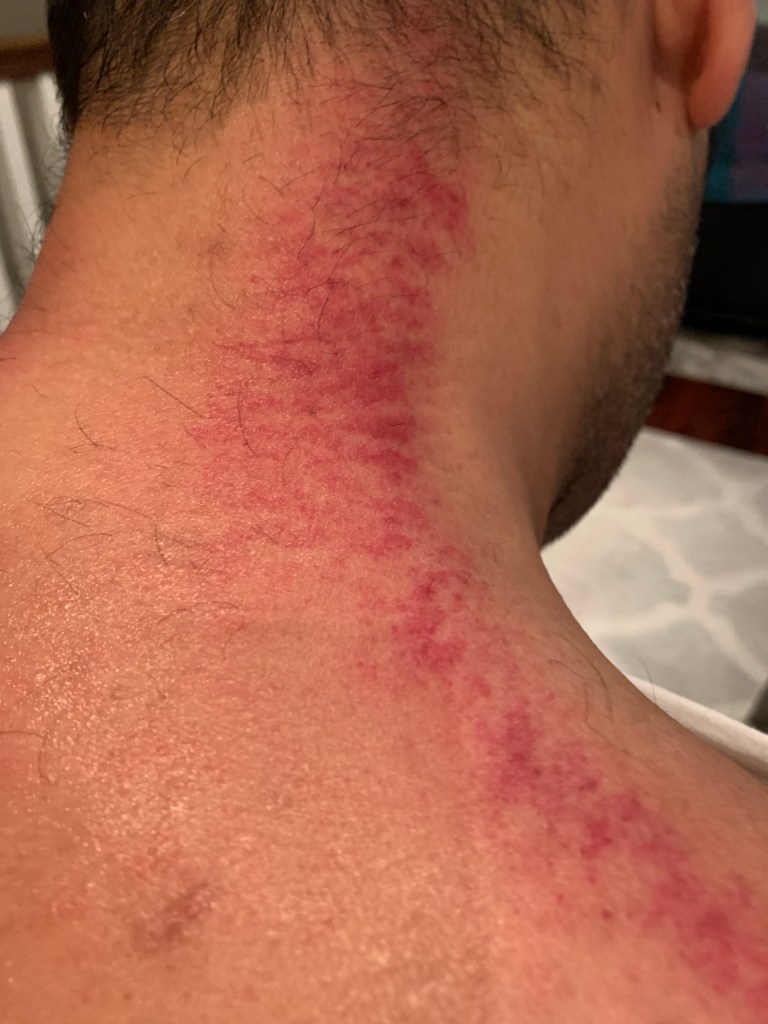
“Gua,” which means to rub out, and “Sha,” which describes the distinct red dots known in Western medicine as petichae, is a skin-scraping technique that has been used for more than 2,000 years across Asia to treat acute and chronic health conditions.
Gua Sha for Acute and Chronic Conditions
In Chinese medicine parlance, Gua Sha releases the exterior and dispels wind and is used for a variety of acute conditions including colds and flu, fever, cough and congestion, compromised immunity and recovery from physical injury.
Gua Sha can also be effective for chronic health issues such as muscle tightness, neck and shoulder pain, headaches, inflammation, menopausal symptoms, Fibromyalgia and digestive upset.
How to Perform Gua Sha
The great news about Gua Sha is that anyone can get really good at it with just a little practice. The first thing you need is a tool, which can be a simple ceramic spoon (the kind used for Pho). Animal horns, shells and stone tools such as Jade wedges are also fantastic Gua Sha tools.
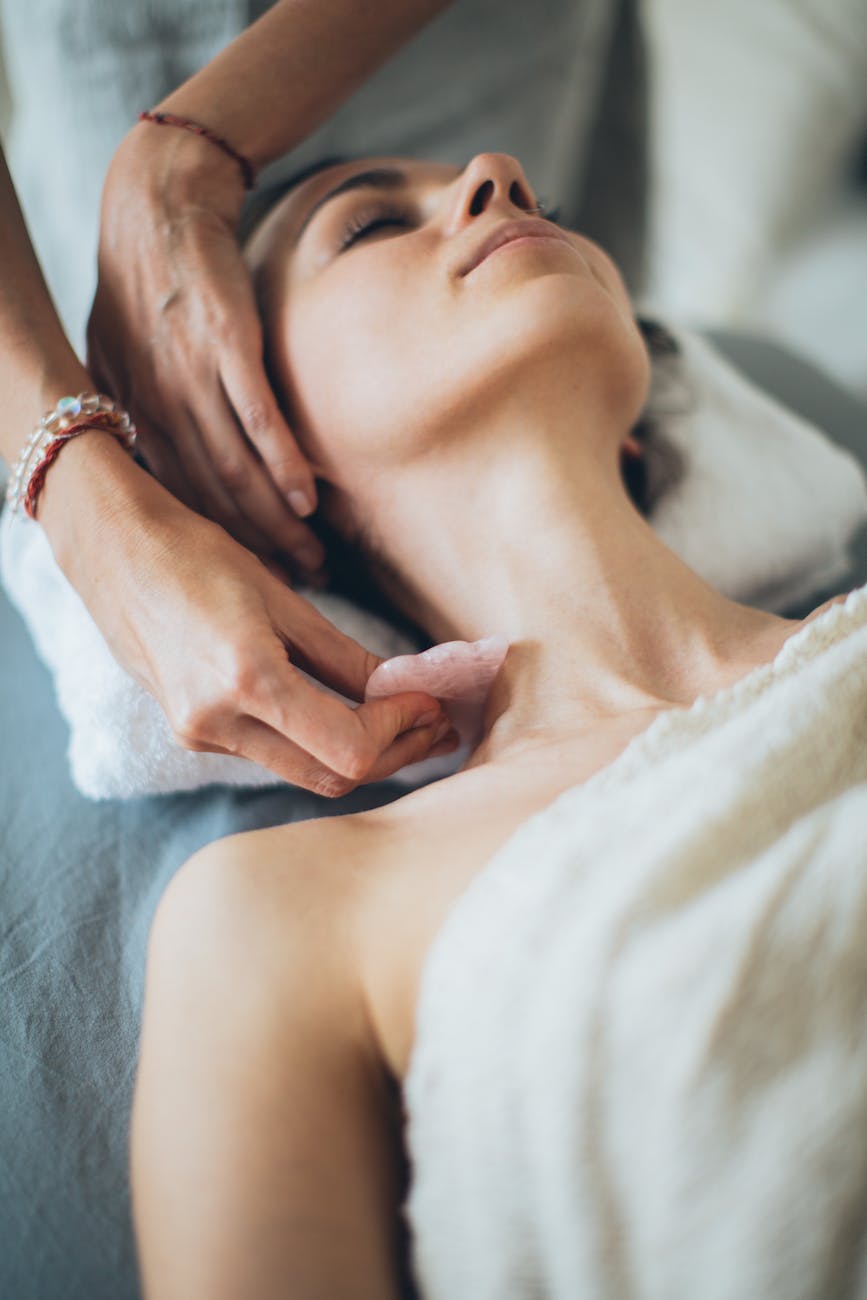
Next you need a willing patient. Because Gua Sha feels amazing–especially for sore necks and shoulders–or back muscles–you’ll likely find someone who’s very eager to be treated. Once your patient is lying prone, you can get to work.
The first thing you must do is apply a simple lotion or balm to the area you intend to scrape. Never scrape dry skin. Hold your tool at a 30-45 degree angle and scrape downward with smooth strokes and gentle pressure.
You can scrape from the top of the neck down and laterally across the tops of the shoulders. You might also scrape from the top of the shoulders down the sides of the spine.
You can increase the pressure if your patient asks for it. After about 20-40 strokes you’ll see redness and, if you see Sha, it’s time to stop.
If the skin turns pink but without the distinctive red dots that indicate Sha, there is no stagnation. You might try moving to a different area of the upper body.
The lighter the color of any Sha, the fresher the stagnation. Dark or purple Sha indicates long-standing blood stasis–and your patient may experience a lightening of stiffness and pain in that area from just one treatment.
After treatment, be sure to wipe any remaining lotion off your patient, and advise them to keep the area covered. Drinking lots of water will flush out toxins while the skin heals and redness dissipates (which should take two to three days at most).
You should also wipe your tool clean and soak in a disinfecting solution for at least 20 minutes.
When NOT to Perform Gua Sha
Gua Sha is contraindicated in weak or frail patients or on ulcerated skin, or skin with lumps and abrasions. Pregnant people should not have Gua Sha performed on their abdomen, lower back or trapezius (shoulder) muscles.
What’s Western Science Say?
The research on Gua Sha is compelling. Gua Sha has been shown to cause an increase in circulation in the soft tissue underneath the skin.
A Harvard University study found that Gua Sha encourages cells to create heme oxygenase-1 (HO-1), a potent cytoprotectant and antioxidant that fights inflammation.
The benefits of Gua Sha are maximal when the blood is brought to the surface of the body. As the body reabsorbs the blood, it breaks down hemoglobin, triggering the production and release of HO-1 and its catalysates: bilirubin, biliverdin and carbon monoxide–potent chemicals that fight infection and inflammation.
In short: there’s a lot of Western science that validates an ancient truth: Gua Sha is a simple, inexpensive and effective way to get and stay well, and we’ll do ourselves and our loved ones a big solid by performing it regularly.
Happy scraping!


 Chinese Medicine by Day
Leave a comment